Indulge In Bacon And Caramelized Onion Grilled Cheese Sandwiches
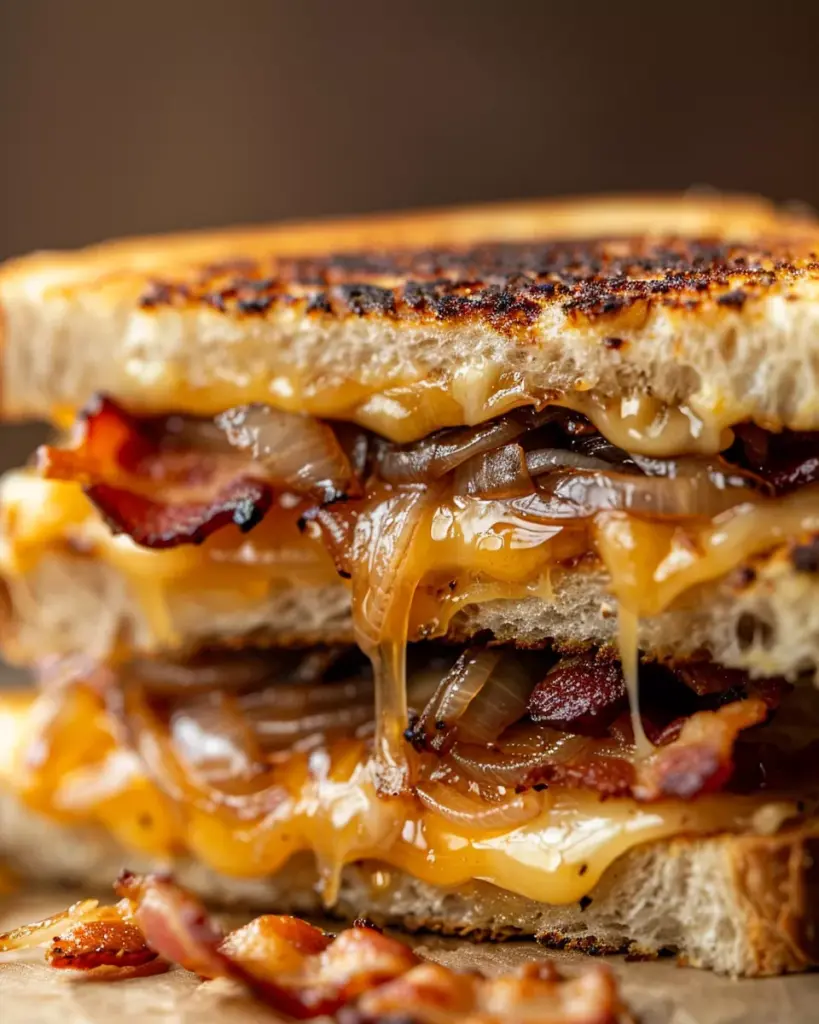
There’s nothing quite like a grilled cheese sandwich. But when you add crispy bacon and sweet, slow-cooked caramelized onions, it becomes a next-level comfort food that satisfies all your cravings. This indulgent twist on a classic favorite delivers bold flavor and rich texture in every bite.
Whether you’re craving a cozy lunch, a satisfying dinner, or a late-night snack, this sandwich hits all the right notes. The smokiness of bacon, sweetness of caramelized onions, and melty richness of cheese combine to create a truly unforgettable eating experience. Plus, it’s quick and easy to make, using simple ingredients you likely already have in your kitchen.
What sets this recipe apart is its versatility and gourmet appeal. It can be customized with your favorite cheeses, breads, or even add-ons like mustard, greens, or hot sauce. This is not just another grilled cheese—it’s a handcrafted sandwich that delivers comfort and satisfaction in under 30 minutes.

Why you’ll love this recipe:
- Perfect balance of sweet, savory, and salty flavors
- Great for lunch, dinner, or entertaining guests
- Quick and easy to prepare
- Uses everyday ingredients
- Easily customizable with variations and substitutions
Let’s dive into the tools, preparation, and exact steps needed to bring this crave-worthy grilled cheese to life.
Preparation Phase & Tools to Use
Essential Tools and Equipment
To make the best bacon and caramelized onion grilled cheese sandwiches, gather these kitchen essentials:
- 1 skillet or frying pan – Non-stick or cast iron recommended for even cooking
- 1 spatula – For flipping sandwiches cleanly
- 1 sharp knife – For slicing onions and bacon
- 1 cutting board – To prepare ingredients safely
- 1 cheese grater (optional) – If using block cheese
- 1 plate – For assembling sandwiches
These tools are easy to find in most home kitchens and make the preparation smooth and efficient.
Importance of Each Tool
Each tool plays a key role in perfecting this recipe:
- Skillet: The heart of the cooking process. Use a heavy-bottomed skillet like cast iron to maintain even heat, allowing the bread to brown without burning and the cheese to melt evenly.
- Spatula: A wide, firm spatula ensures clean, easy flips without tearing the bread.
- Knife & Cutting Board: Uniform onion slices ensure even caramelization. A clean, stable cutting surface is essential.
- Cheese Grater: Grated cheese melts more quickly and evenly than slices. Use if you’re customizing with block cheese.
- Plate: Keep your workspace organized by assembling sandwiches on a clean surface.
Preparation Tips
- Slice onions uniformly to ensure even caramelization.
- Preheat the skillet before cooking for a consistent crust.
- Use room temperature butter for easier spreading.
- Cook bacon in advance and drain on paper towels to remove excess grease.
- Choose sturdy bread like sourdough or whole grain to prevent sogginess.
Ingredients
Here is a clear, organized list of what you’ll need:
- 8 slices bread – Preferably sourdough or whole grain
- 8 slices bacon
- 2 medium onions – Thinly sliced
- 2 tablespoons olive oil
- 8 slices cheese – Such as cheddar or Gruyère
- 4 tablespoons unsalted butter – For spreading
- Salt and pepper – To taste
Optional additions:
- A dash of hot sauce or sprinkle of red pepper flakes for heat
- Swap in your favorite cheeses (Swiss, provolone, smoked Gouda)
Using fresh, quality ingredients will make a noticeable difference in flavor and texture.
Step-by-Step Directions
Follow these step-by-step instructions for the perfect sandwich:
- Caramelize the onions:
In a skillet, heat the olive oil over medium heat. Add the thinly sliced onions, season with salt and pepper, and cook slowly. Stir occasionally for about 15 minutes until they become golden brown and caramelized. Set aside. - Cook the bacon:
In the same skillet, cook the bacon slices until crispy and golden brown, about 5–7 minutes. Drain on paper towels to remove excess grease. - Assemble the sandwiches:
Lay out your bread slices. On one slice, layer a slice of cheese, a few pieces of crispy bacon, a generous portion of caramelized onions, and another slice of cheese. Top with the second slice of bread. - Butter the bread:
Spread about 1 tablespoon of butter on the outside of each sandwich slice for that perfect golden crust. - Grill the sandwiches:
Preheat the skillet over medium heat. Add the sandwich and cook until the bread is golden and crispy and the cheese is melted, about 4–5 minutes per side. Flip once carefully using your spatula. - Let rest and serve:
Once grilled, transfer sandwiches to a plate and let rest for a minute. Slice in half and serve warm.
Pro Tips and Variations:
- For even melting, cover the skillet briefly with a lid after flipping.
- Try mixing cheeses for deeper flavor (e.g., cheddar + mozzarella).
- Add a thin layer of mustard or garlic aioli for a gourmet twist.
- Use a sandwich press or grill pan for extra crisp texture.
Serving Suggestions
A sandwich as rich and flavorful as a bacon and caramelized onion grilled cheese deserves the right presentation and pairings to enhance the entire experience. Whether you’re serving it at a casual lunch or a cozy dinner, how you present and pair it can elevate this dish from a simple snack to a gourmet meal.
How to Serve
- Slice it diagonally for that classic look and satisfying presentation.
- Serve immediately while the cheese is gooey and the bread remains crisp.
- Pair with a crisp pickle or tangy slaw to cut through the richness.
- Use rustic wooden boards or ceramic plates for an inviting, home-style feel.
- Garnish the plate with fresh herbs like parsley or chives for a professional touch.
Beverage Pairings
- Iced tea or lemonade for a refreshing contrast.
- Craft beer with malty or hoppy notes complements the smoky bacon.
- Tomato soup or bisque balances the richness and warms the palate.
Common Mistakes to Avoid & How to Perfect the Recipe
Making grilled cheese may seem straightforward, but subtle missteps can affect the final taste and texture. Here’s how to avoid them and make your sandwich perfect every time.
1. Bread Browns Too Quickly, Cheese Doesn’t Melt
Problem: High heat causes the bread to brown before the cheese melts.
Solution: Cook over medium heat and use a lid to trap heat and aid melting.
2. Soggy Bread
Problem: Too much butter or oil can make the sandwich greasy or soggy.
Solution: Spread a thin, even layer of room temperature butter. Also, drain bacon properly.
3. Incomplete Caramelization
Problem: Onions are undercooked or still raw in the center.
Solution: Slice them uniformly and cook on low to medium heat for at least 15 minutes, stirring occasionally.
4. Cheese Doesn’t Melt Well
Problem: Using cheese that doesn’t melt evenly or quickly.
Solution: Choose melting cheeses like cheddar, Gruyère, mozzarella, or Havarti. Avoid hard aged cheeses.
5. Bread Tears or Collapses
Problem: Using thin or soft bread that can’t handle the fillings.
Solution: Use hearty breads like sourdough or thick-sliced whole grain.
6. Overstuffed Sandwich
Problem: Too much filling causes uneven cooking and spillage.
Solution: Use moderate layers and balance bacon, onion, and cheese ratios.
7. No Rest Time After Cooking
Problem: Cutting immediately can cause fillings to spill out.
Solution: Let the sandwich rest for 1 minute before slicing.
8. Uneven Cheese Distribution
Problem: Gaps cause inconsistent melt.
Solution: Ensure even coverage of cheese on both bread slices.
Side Dish Recommendations
To create a well-rounded meal, pair your grilled cheese sandwich with one of these flavorful side dishes. Each option offers a unique contrast that enhances the richness of the sandwich.
Classic Tomato Soup
A timeless match. The acidity of the tomatoes cuts through the richness of the cheese and bacon. Serve hot with a swirl of cream or fresh basil.
Mixed Green Side Salad with Vinaigrette
Fresh greens with a sharp vinaigrette balance the warm, cheesy sandwich. Include arugula, baby spinach, cherry tomatoes, and red onion.
Crispy Sweet Potato Fries
Their natural sweetness complements the caramelized onions. Bake or air fry until golden and serve with a garlic aioli or spicy ketchup.
Pickled Red Onions or Pickles
Pickled sides cleanse the palate and add brightness to each bite. Quick-pickle onions with vinegar, sugar, and salt for a tangy touch.
Coleslaw (Creamy or Vinegar-Based)
Crunchy coleslaw offers a refreshing texture contrast. Try a vinegar-based slaw for a lighter side or a creamy version for indulgence.
Roasted Brussels Sprouts with Bacon Bits
A savory side that echoes the bacon flavor in the sandwich. Roast with olive oil and garlic for a crispy finish.
Fresh Fruit Salad or Sliced Apples
Add a sweet and refreshing note to your plate. Apples work especially well, offering a crisp texture that pairs beautifully with cheese.
Kettle-Cooked Chips and Dips
For a casual option, serve with crunchy chips and a flavorful dip like honey mustard, garlic aioli, or ranch.
Recipe Tips, Storage and Reheating Instructions
Mastering this sandwich means knowing how to store it properly and reheat it without losing its crispy texture or gooey center. Here are expert tips to help you make the most of every batch.
Expert Recipe Tips
- Preheat your skillet: Always heat the skillet before adding the sandwich. This ensures even browning.
- Use medium heat: Prevents the bread from burning while allowing cheese to melt.
- Grate cheese if using a block: Helps it melt faster and more evenly than slices.
- Layer smartly: Cheese on both sides of the filling creates a melted seal and holds everything together.
- Press gently: A gentle press with a spatula creates a crisp, even crust without squeezing out the filling.
- Let it rest: Rest the sandwich for a minute before slicing to avoid losing melty cheese.
Storage Instructions
- Refrigerate: Let the sandwich cool completely. Wrap tightly in foil or place in an airtight container. Store in the fridge for up to 2 days.
- Separate components: Store caramelized onions and cooked bacon separately if you’re prepping in advance. Keep both in airtight containers for up to 3 days.
Reheating Instructions
- In the skillet: Place the sandwich in a preheated skillet over medium-low heat. Cook each side for 3–4 minutes until heated through.
- In the oven: Preheat to 375°F (190°C). Place the sandwich on a baking sheet and heat for 10 minutes, flipping halfway through.
- Avoid microwaving: It makes the bread soggy and unevenly melts the cheese.
- Butter again: Lightly butter the exterior before reheating to restore crispness.
Freezing Tips
- To freeze: Assemble the sandwich without butter. Wrap tightly in foil or freezer-safe wrap. Freeze for up to 1 month.
- To cook from frozen: Thaw overnight in the fridge. Butter the outside, then grill as usual.
Frequently Asked Questions (FAQs)
Here are answers to the most common questions from readers and search engine queries:
Can I use different types of bread?
Yes. Use sturdy bread like sourdough, rye, or whole grain to support the fillings and hold up to grilling. Avoid soft sandwich bread, which may become soggy.
What cheese melts best?
Cheddar, Gruyère, Havarti, and mozzarella all melt well. For a deeper flavor, mix two types—such as aged cheddar with a creamy Havarti.
How do I prevent the bread from burning before the cheese melts?
Cook on medium heat and cover the skillet with a lid for 30–60 seconds to trap heat and help melt the cheese. Avoid high heat.
Can I caramelize the onions ahead of time?
Absolutely. Caramelized onions keep well in the fridge for up to 3 days. Reheat in the skillet before assembling your sandwich.
How can I make this sandwich vegetarian?
Skip the bacon and substitute sautéed mushrooms, roasted red peppers, or a plant-based bacon alternative. You’ll still get excellent flavor and texture.
What if my sandwich turns out soggy?
Sogginess usually results from too much butter, undrained bacon, or moist onions. Drain all components well and use a moderate amount of butter.
Can I use a panini press?
Yes. A panini press works well for this recipe. It applies even pressure and helps achieve a crisp, golden exterior while melting the cheese perfectly.
How do I reheat it without ruining the texture?
Use a skillet or oven rather than a microwave. Butter the outside lightly before reheating to re-crisp the bread.
Why caramelize the onions instead of sautéing them?
Caramelization develops complex sweetness and richness, transforming onions into a savory-sweet highlight that balances the saltiness of bacon and richness of cheese.