Baked Brie in Puff Pastry with Honey and Fig
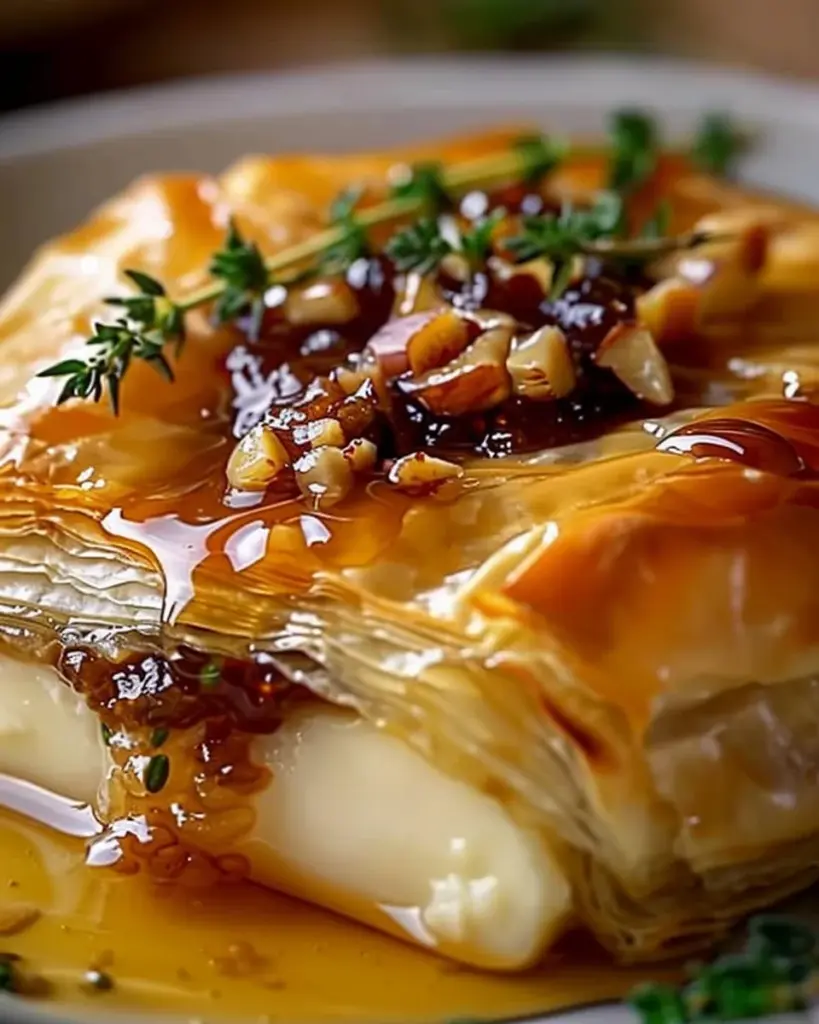
This Baked Brie in Puff Pastry with Honey and Fig is an elegant appetizer that marries creamy, melted brie with flaky pastry, sweet fig preserves and a drizzle of honey. It’s perfect for entertaining—when you cut into the golden crust, the cheese melts and pours out, creating a rich, indulgent moment for every guest.
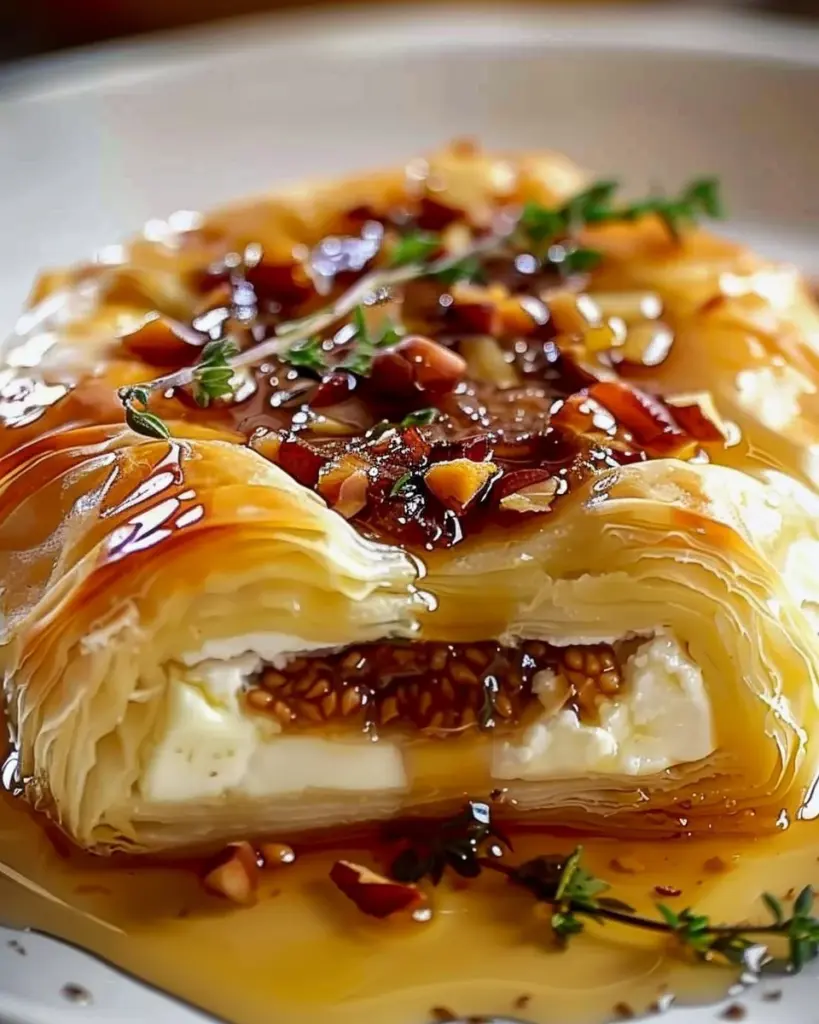
the recipe appeal, uses, and any unique features
- The appeal lies in the contrast: crisp, buttery pastry wrapped around gooey, warm cheese, sweet fig and honey, and aromatic fresh thyme with a hint of pepper.
- It works brilliantly for holiday gatherings, dinner parties, or casual get‑togethers where you want something impressive yet easy.
- Unique features include using fig preserves (rather than just jam) and the optional nuts for crunch. The preparation hides the decadent brie inside pastry, so until you slice it, it feels like a reveal.
Why readers will love it
Readers will love this recipe because it offers “wow” factor with minimal fuss. It uses just a handful of ingredients, most of which are easy to find, yet the outcome looks gourmet. It’s vegetarian‑friendly, shareable, and can be prepped ahead of time for convenience. Plus, the sweet‑savory combination makes it memorable.
Preparation Phase & Tools to Use
Essential Tools and Equipment
- Baking sheet lined with parchment paper: ensures the pastry bakes evenly and prevents sticking.
- Rolling pin (or lightly floured surface): to roll out the puff pastry sheet for proper coverage.
- Sharp knife: to score the top of the brie (helps the cheese melt evenly) and to trim any excess pastry.
- Pastry brush: for applying the beaten egg wash, which gives the pastry a golden, glossy finish.
- Cooling rack or board: for letting the baked brie rest before serving – crucial for safe slicing.
- Small bowl: for mixing the egg wash (egg + water or milk) for brushing the pastry.
Importance of Each Tool
- The baking sheet + parchment ensure a clean cook and easy clean‑up.
- Rolling pin: rolling out the pastry enables a good layer that will wrap completely and bake uniformly.
- Sharp knife: scoring the brie and trimming pastry help with melt control and presentation.
- Pastry brush: the egg wash promotes browning and gives a glossy crust that elevates the dish visually.
- Cooling rack/board: resting prevents the molten cheese from running too early and gives better texture.
- Small bowl: keeps ingredients ready and allows for quick brushing without mess.
Preparation Tips
- Thaw the puff pastry properly: it should be pliable but still cool so the layers remain intact. (If pastry gets too warm, the layers may collapse and bake less flaky.)
- Keep the brie cold until you’re ready to wrap it—warm cheese can ooze out prematurely.
- Lightly flour the surface when rolling pastry so it doesn’t stick—but avoid over‑flouring, which can toughen edges.
- Score the top of the brie (crosshatch) before adding toppings: this helps heat penetrate and improves melt consistency.
- Use the egg wash just before baking so the pastry gets maximum browning. Trim any excess pastry so seams are neat and bake evenly.
- After baking, allow a short rest (about 5 minutes) so the cheese sets slightly for safer and cleaner slicing.
Ingredients
Scale: 1× (for ~8 servings); scale up as desired
- 1 wheel of brie cheese (8–12 oz)
- 1 sheet frozen puff pastry, thawed
- 1–2 tablespoons honey
- 1–2 tablespoons fig preserves
- 1 tablespoon fresh thyme leaves
- Black pepper, to taste
- 1 egg, beaten
- Coarse sugar, for sprinkling (optional)
- Chopped walnuts or pecans (optional)
Step‑by‑step Directions
- Preheat the oven to 425 °F (220 °C). Line a baking sheet with parchment paper.
- On a lightly floured surface, roll out the thawed puff pastry sheet to an appropriate size so it will completely wrap around the brie. Transfer the pastry to the prepared baking sheet.
- Place the brie wheel in the center of the pastry. Using a sharp knife, score the top rind of the brie in a crosshatch pattern (approximate spacing ~½‑inch) to prompt even melting.
- Spread the fig preserves evenly over the top of the brie. Drizzle the honey over the preserves and cheese. Sprinkle the fresh thyme leaves on top and add a light grind of black pepper. If you are using nuts (walnuts or pecans), scatter them at this point for crunch.
- Fold the puff pastry up and over the brie, pleating or tucking the edges neatly so the cheese is fully enclosed. Seal the seams by pressing gently; trim any excess pastry to avoid bulky folds.
- In the small bowl, beat the egg (add a splash of water or milk if desired). Brush the entire outer surface of the pastry with the beaten egg (egg wash). If you like a sweet‑crisp finish, lightly sprinkle coarse sugar on top.
- Bake in the preheated oven for 20‑25 minutes (or until the pastry is golden‑brown and crisp). Keep an eye on the underside—if you notice uneven browning or pale dough, rotate the sheet or leave in a minute or two longer.
- Remove from the oven and allow to rest about 5 minutes. This rest allows the melted cheese to settle, making it safer and easier to slice.
- Serve warm, directly on the baking sheet or transferred to a board, accompanied by crackers, sliced baguette, or fresh fruit for dippers.
Tips or Variations
- For a sweeter version: increase the amount of honey or choose a more intense fig preserve.
- For texture contrast: use chopped toasted pecans, pistachios or walnuts. Toasting the nuts beforehand enhances flavor.
- For herb variation: substitute or add fresh rosemary or sage instead of or in addition to thyme.
- For a savory twist: skip the fig preserves and honey, and instead top the brie with caramelized onions or sautéed mushrooms plus herbs.
- Assemble ahead: you can wrap the brie in pastry ahead of time, keep refrigerated and bake just prior to serving to save prep time.
- If you use a larger wheel of brie (12‑16 oz), roll the pastry slightly larger and increase bake time by a few minutes to ensure the interior is fully melted.
Serving Suggestions
Baked Brie in Puff Pastry with Honey and Fig is best served warm, ideally just after a short rest out of the oven. This preserves its creamy interior while allowing the flaky pastry to remain crisp. Here are several ideas to elevate your presentation and pairings:
- Serve directly on a wooden board or a large platter for a rustic and stylish look.
- Offer a cheese knife or small serrated knife to cut clean slices without tearing the pastry.
- Include assorted crackers: water crackers, multigrain, or sea salt crisps work well.
- Add sliced baguette or ciabatta, lightly toasted if preferred.
- Pair with fresh fruit such as grapes, apple slices, pears, or figs for a contrast in texture and temperature.
- Offer dried fruits like apricots, cranberries, or dates on the side to balance savory and sweet notes.
- Add a small bowl of extra fig preserves or honey for guests to drizzle as they like.
- Garnish with additional fresh thyme or rosemary sprigs for color and aroma.
This appetizer also pairs beautifully with sparkling wines, dry white wines, or even a light pinot noir.
Common Mistakes to Avoid & How to Perfect the Recipe
Perfecting this baked brie comes down to a few key steps. Here are the most common mistakes and how to avoid them:
Mistake 1: Using puff pastry that’s too warm
Solution: Keep the puff pastry chilled until you’re ready to roll and use it. Overly soft pastry won’t puff properly and may tear.
Mistake 2: Not sealing the edges well
Solution: After folding the pastry over the brie, press seams together gently but firmly. Trim any excess to avoid uneven baking.
Mistake 3: Overfilling the top with preserves
Solution: Stick to 1–2 tablespoons. Too much can overflow during baking, making the pastry soggy.
Mistake 4: Skipping the egg wash
Solution: Always brush the pastry with a beaten egg to ensure a shiny, golden finish.
Mistake 5: Undercooking or overcooking
Solution: Bake for 20–25 minutes. Check at the 18-minute mark. Undercooking may leave doughy patches; overcooking dries the cheese and overbrowns the crust.
Mistake 6: Cutting immediately after baking
Solution: Let it rest for 5 minutes before cutting. This allows the melted cheese to settle and reduces mess.
Mistake 7: Serving without support
Solution: Serve on a flat, firm surface. If using a soft cheese wheel without enough crust support, the brie can collapse and spill out quickly.
Mistake 8: Forgetting to score the brie
Solution: Lightly score the top to help the heat penetrate and ensure smooth melting inside.
By following these corrections, your baked brie will consistently turn out with crisp pastry, gooey interior, and balanced flavor.
Side Dish Recommendations
This appetizer works well on a holiday board or as part of a larger spread. Here are eight recommended side dishes or accompaniments:
1. Sliced Baguette or Crostini
Toasted crostini offer a crunchy base for scooping up the brie and its toppings.
2. Mixed Fresh Fruit
Sliced pears, apples, grapes, and fresh figs offer a sweet, crisp counterbalance.
3. Candied or Spiced Nuts
Walnuts, pecans, or almonds spiced with cinnamon or rosemary pair wonderfully with the brie’s richness.
4. Charcuterie Board
Serve alongside prosciutto, salami, or soppressata. These meats add a savory depth and texture.
5. Arugula Salad with Balsamic Glaze
A peppery salad helps cut the richness of the cheese and pastry.
6. Marinated Olives
Herby, briny olives provide a sharp contrast to the sweetness of the fig and honey.
7. Roasted Vegetables
Warm roasted carrots, sweet potatoes, or Brussels sprouts can complement the flavors without overpowering the dish.
8. Sparkling Wine or Apple Cider
While not a dish, a crisp drink cleanses the palate and pairs beautifully with the creamy cheese and pastry.
Recipe Tips
These expert tips will ensure your Baked Brie in Puff Pastry with Honey and Fig turns out beautifully every time.
- Chill before baking: After wrapping the brie in puff pastry, chill it for 10–15 minutes in the refrigerator before baking. This helps the pastry hold its shape and improves flakiness.
- Score the brie: Lightly score the top of the cheese before adding preserves—this ensures even melting and better flavor absorption.
- Don’t overfill: Use a moderate amount of fig preserves and honey (1–2 tablespoons each). Too much can cause leaks or sogginess.
- Use parchment paper: Always line your baking sheet. This prevents sticking and simplifies clean-up.
- Customize the toppings: Add fresh rosemary, chopped nuts, caramelized onions, or even a touch of chili for spice.
- Make mini versions: Use smaller brie rounds or cut a large wheel into quarters and wrap individually for party-sized bites.
- Rest before serving: Allow 5–10 minutes for the cheese to settle before cutting. This helps with presentation and texture.
- Use a serrated knife: For cleaner slices, especially if the pastry is thick or crisp on the edges.
Storage and Reheating Instructions
Storage
- Let leftover brie cool completely before storing.
- Wrap it tightly in aluminum foil or place it in an airtight container.
- Store in the refrigerator for up to 3–4 days.
Reheating
- Preheat the oven to 350°F (175°C).
- Place the leftover pastry-wrapped brie on a baking sheet lined with parchment.
- Bake for 8–10 minutes or until warmed through and the cheese is melty again.
- Avoid using a microwave, which softens the pastry and makes it soggy.
If you’ve made the brie in advance but haven’t baked it yet:
- Wrap it in plastic wrap or foil and refrigerate up to 24 hours.
- When ready to serve, brush with egg wash and bake as instructed.
FAQs
What kind of brie should I use?
Use a standard 8–12 oz wheel of brie. Choose a double- or triple-cream variety for a rich, creamy texture. Avoid overly runny cheeses before baking.
Can I use crescent dough or phyllo instead of puff pastry?
Yes, crescent roll dough or phyllo can work, but the texture will differ. Puff pastry gives the flakiest, most classic result.
Do I have to remove the rind?
No, the rind is edible and helps the cheese keep its shape while baking. Scoring it allows flavor to absorb better.
Can I freeze baked brie?
It’s not ideal to freeze once baked—reheated pastry can become soggy. However, you can freeze it before baking. Wrap tightly and freeze for up to 2 weeks. Bake from frozen, adding 5–10 extra minutes to the baking time.
How do I prevent the pastry from becoming soggy?
Avoid overfilling with honey or preserves. Ensure the oven is preheated and bake until fully golden. Use parchment to help airflow.
Is this recipe vegetarian?
Yes, this recipe is vegetarian if you use vegetarian-friendly brie and puff pastry.
Can I make this without nuts?
Absolutely. The nuts are optional. The dish is just as delicious without them.
What if my brie leaks while baking?
Leaking can occur if the pastry isn’t sealed well or if overfilled. To fix this, seal seams carefully and bake seam-side down.
Can I add savory toppings?
Yes! Caramelized onions, garlic, sautéed mushrooms, or even bacon can add a savory twist.
What wines pair best with this appetizer?
Dry whites like Sauvignon Blanc, sparkling wines like Prosecco, or a light red like Pinot Noir pair beautifully.