Crispy Rice Salmon
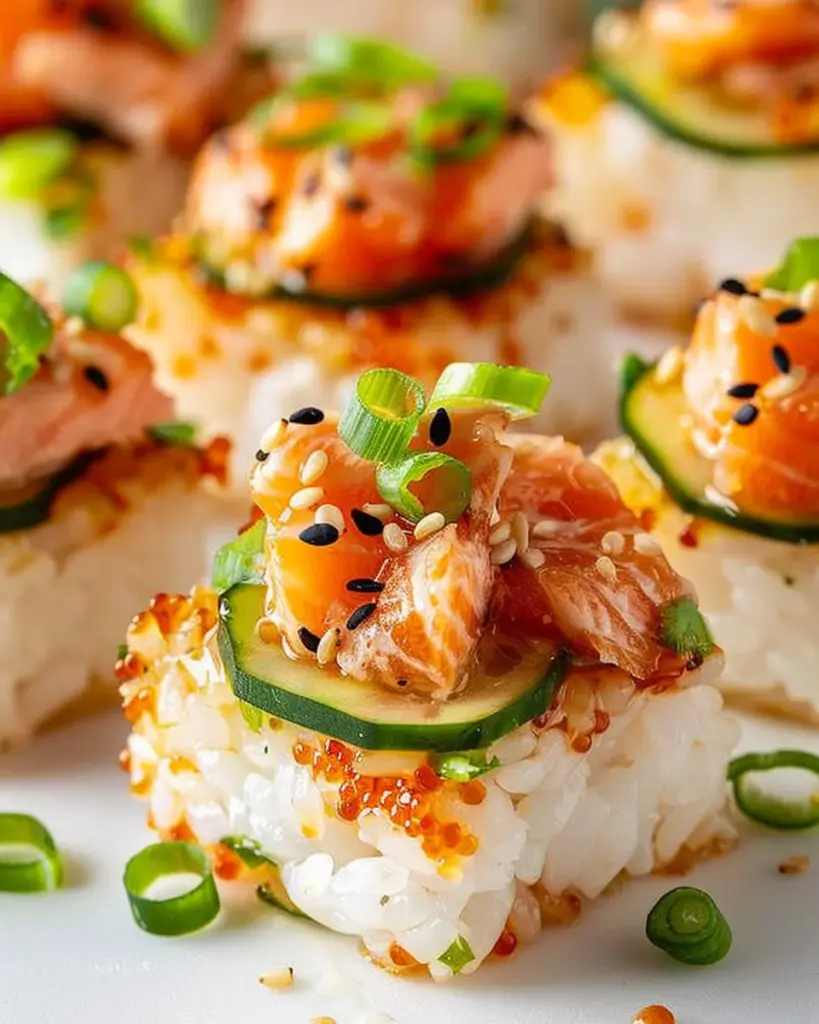
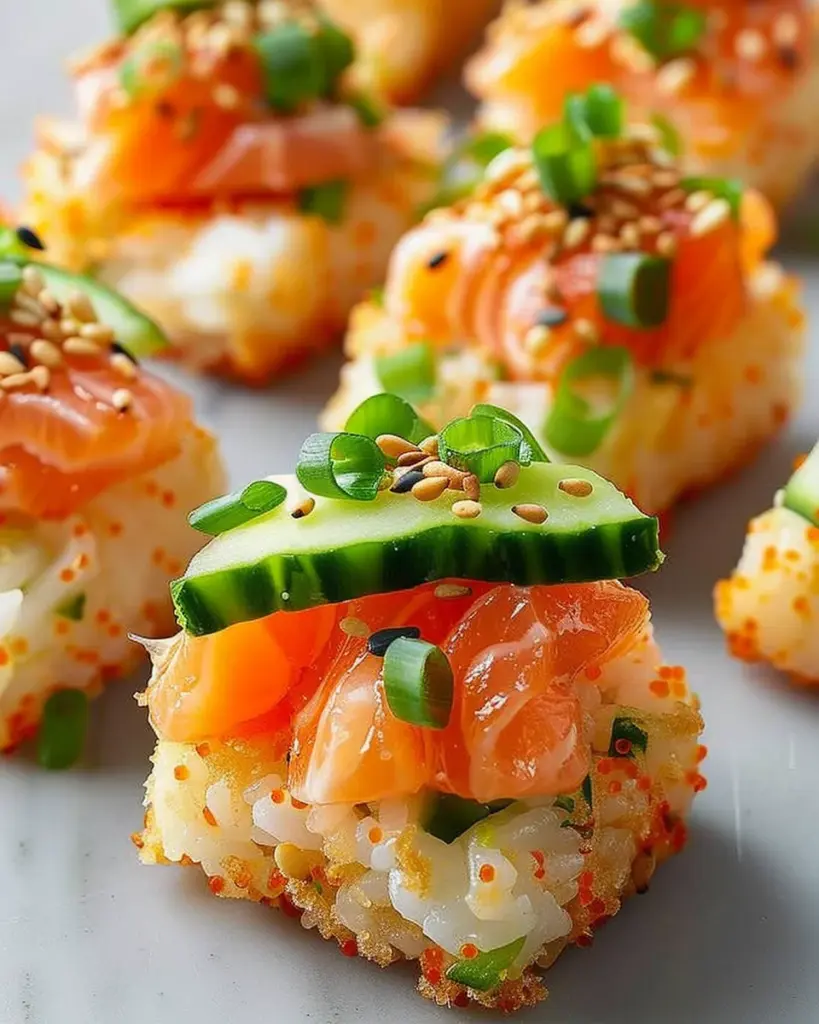
Golden, pan-fried sushi rice paired with creamy, spicy salmon delivers an elegant yet accessible appetizer that feels straight out of a sushi bar. These bite-sized crispy rice salmon squares feature a contrast of textures—crispy exterior, tender interior, and cool, rich topping. With bright citrus from yuzu juice, gentle heat from yuzu kosho, and the umami of Kewpie mayonnaise and soy sauce, every bite is bursting with bold, satisfying flavor.
Why This Recipe Works
- Uses sushi-grade salmon for freshness and texture
- Incorporates Japanese fusion ingredients like yuzu and kewpie mayo
- Simple prep, yet visually stunning and packed with flavor
- Great for entertaining: two-bite appetizers with a sushi-style flair
- Customizable with toppings like cucumber, avocado, or sesame
When to Serve It
- Dinner parties
- Weekend snacks
- Sushi-themed nights
- Potlucks or small gatherings
Get ready to learn how to recreate this standout dish with detailed tools, tips, ingredients, and foolproof directions.
Preparation Phase & Tools to Use
Creating crispy rice salmon starts with proper preparation. Here’s what you need before cooking.
Essential Tools and Equipment
- Mixing bowls – For rice seasoning and salmon topping
- Rice cooker or pot – Ensures perfect sushi rice texture
- Rice spoon or wooden paddle – Prevents mashing the grains
- 8×8 baking tray – For shaping the chilled rice block
- Plastic wrap – Lines tray for easy rice removal
- Medium skillet – For pan-frying the rice squares
- Wire rack + baking sheet – Keeps rice crispy after frying
- Sharp knife + cutting board – For precise slicing
- Tongs or slotted spatula – For safe rice handling while frying
Importance of Each Tool
- The rice cooker provides consistent, ideal moisture levels.
- A rice spoon mixes without crushing grains.
- The wire rack prevents sogginess post-frying.
- A sharp knife allows clean cuts on chilled rice blocks.
- Plastic wrap keeps the rice from sticking to the tray.
Preparation Tips
- Rinse rice thoroughly: 4-5 rinses until the water is clear removes starch and prevents mushiness.
- Chill the rice block for at least 3 hours to firm up before cutting.
- Use a sharp knife: this prevents the rice cubes from falling apart.
- Heat the oil properly: Drop in a grain of rice—it should sizzle rapidly.
- Prep all ingredients before frying. Once you begin, it moves quickly.
Ingredients
This recipe is split into three essential components: the seasoned rice, the spicy salmon topping, and fresh garnishes.
Sushi Rice
- 1.5 cups dry short-grain sushi rice, rinsed thoroughly
- 2 cups water
- 1 teaspoon salt
- 3 tablespoons rice vinegar
- 1 tablespoon granulated sugar
- 1 teaspoon toasted sesame oil
Salmon Topping
- 1 pound sushi-grade salmon, finely diced
- 3 tablespoons Kewpie mayonnaise
- 1 teaspoon yuzu kosho
- 1 teaspoon yuzu juice
- 1 tablespoon soy sauce
- 2 teaspoons sesame oil
Garnish
- 2 cucumbers, halved and thinly sliced
- 2 tablespoons toasted sesame seeds
- 4 stalks green onion, chopped
Step-by-Step Directions
Step 1: Prepare the Rice
- Rinse the rice under cold water 4–5 times until the water runs clear. This removes excess starch.
- Add the rinsed rice and 2 cups of water to a rice cooker or pot. Cook according to the sushi rice setting or bring to a boil, then simmer covered for about 18 minutes on the stovetop.
- In a small bowl, mix salt, rice vinegar, sugar, and toasted sesame oil until dissolved.
- Once the rice is cooked, gently transfer it to a large bowl. Pour the seasoning over the hot rice and gently fold it in using a rice paddle or spatula until fully incorporated.
Step 2: Shape and Chill the Rice
- Line an 8×8 baking tray with plastic wrap.
- Spread the seasoned rice into the tray and press it down evenly to a thickness of about ½ inch.
- Wrap and refrigerate for at least 3 hours, or overnight, to allow the rice to firm up and slightly dry.
Step 3: Slice and Pan-Fry the Rice
- Remove the chilled rice block from the tray and unwrap it.
- Slice into bite-sized rectangles (about 2 inches long). Pat each piece dry with paper towels to remove condensation.
- Heat ¼–½ cup neutral oil (like vegetable or canola oil) in a skillet over medium-high heat.
- Once hot, carefully add rice pieces, leaving room between each.
- Fry each piece for 2–3 minutes per side until golden brown.
- Transfer to a wire rack set over a baking sheet to drain and maintain crispness.
Step 4: Prepare the Spicy Salmon Topping
- Dice the sushi-grade salmon into small cubes.
- In a bowl, combine salmon with Kewpie mayo, yuzu kosho, yuzu juice, soy sauce, and sesame oil.
- Stir well to combine, then refrigerate until ready to assemble.
Step 5: Assemble the Crispy Rice Salmon Bites
- Place a slice of cucumber on each crispy rice square.
- Spoon 1–2 tablespoons of the salmon mixture on top.
- Garnish with toasted sesame seeds and chopped green onion.
- Serve immediately for maximum crunch and flavor.
Serving Suggestions
Crispy rice salmon is not only an appetizer—it’s a conversation starter. Its layered textures and bright flavors make it perfect for both casual and elegant gatherings. Serve these sushi-inspired bites on a dark ceramic or slate platter to contrast the golden rice and vibrant salmon topping.
When to Serve
- As a small plate at a dinner party
- As a pre-dinner snack or canapé during cocktail hour
- At a sushi night with friends
- On a tapas-style or fusion-themed menu
- During game day as a gourmet finger food
Beverage Pairings
- Crisp white wines: Sauvignon Blanc, Pinot Grigio
- Sparkling options: Champagne or Prosecco cut through the richness
- Sake: Especially a dry or slightly fruity Junmai Ginjo
- Chilled green tea: For a non-alcoholic Japanese option
- Japanese beer or light lager: Cuts the spice and complements the salty richness
Presentation Ideas
- Arrange bites in neat rows for clean visual impact
- Garnish the tray with microgreens or edible flowers for color
- Serve with a small dish of soy sauce, wasabi, or citrus-soy dipping sauce on the side
Serve immediately after assembling for the best experience—the contrast between hot, crispy rice and cool, spicy salmon is key to this dish’s success.
Common Mistakes to Avoid & How to Perfect the Recipe
Mastering crispy rice salmon comes down to a few essential techniques. Avoid these pitfalls to achieve restaurant-quality results every time.
Mistake 1: Using the Wrong Type of Rice
Why it matters: Long-grain rice won’t hold its shape after cooking and will fall apart during frying.
Solution: Always use short-grain sushi rice and rinse thoroughly before cooking.
Mistake 2: Skipping the Chilling Phase
Why it matters: Warm or freshly cooked rice is too soft to slice and fry.
Solution: Chill the rice block in the fridge for at least 3 hours, preferably overnight.
Mistake 3: Overcrowding the Pan
Why it matters: This reduces oil temperature and causes uneven frying.
Solution: Fry in small batches and maintain oil heat between rounds.
Mistake 4: Oil Not Hot Enough
Why it matters: Low oil temperature creates soggy, greasy rice instead of a crisp crust.
Solution: Drop a grain of rice into the oil—if it sizzles immediately, it’s ready.
Mistake 5: Not Drying Rice Cubes Before Frying
Why it matters: Surface moisture causes oil to splatter and prevents proper browning.
Solution: After cutting the rice, pat dry with paper towels before frying.
Mistake 6: Topping with Warm Salmon Mixture
Why it matters: Warm toppings make the rice soggy faster.
Solution: Keep the salmon mixture chilled and assemble only when ready to serve.
Mistake 7: Overmixing the Salmon
Why it matters: Can lead to mushy texture or loss of individual pieces.
Solution: Mix gently, just until ingredients are combined.
Mistake 8: Not Seasoning the Rice Properly
Why it matters: The rice needs its own flavor profile to balance the dish.
Solution: Mix salt, vinegar, sugar, and sesame oil into the rice while still warm for even absorption.
Side Dish Recommendations
Enhance your crispy rice salmon platter with complementary side dishes that balance the richness and spice with fresh, clean flavors.
1. Miso Soup with Wakame
A warm, umami-rich starter that pairs perfectly with chilled salmon bites. Use white miso paste and add wakame seaweed and green onion for depth.
2. Seaweed Salad (Wakame & Sesame)
A cool, briny salad that adds a refreshing texture. Often served in Japanese restaurants alongside sushi.
3. Pickled Ginger & Cucumber Ribbon Salad
Thinly sliced cucumbers and pink pickled ginger tossed in rice vinegar create a bright, palate-cleansing side.
4. Edamame with Sea Salt
Simple steamed soybeans are a healthy, hands-on snack. Sprinkle with flaky sea salt for added texture.
5. Wasabi Mashed Avocado on Toasted Brioche
A creamy spread with a kick of wasabi pairs well with the crispy texture of the rice bites.
6. Japanese Sweet Potato Fries with Togarashi
Crispy baked or fried sweet potato wedges seasoned with Japanese togarashi spice mix. Slightly sweet, mildly spicy, and great for contrast.
7. Shishito Peppers with Lemon and Flake Salt
Blistered shishito peppers with a squeeze of lemon offer smoky, citrusy balance to the salmon.
8. Cold Soba Noodle Salad with Sesame-Ginger Dressing
Chilled buckwheat noodles tossed with sesame oil, soy, and rice vinegar create a savory, nutty side to round out the meal.
Expert Tips for Success
- Use sushi-grade salmon: This ensures both flavor and safety when consuming raw fish.
- Keep rice thickness consistent: Press evenly into the pan, about ½ inch thick, for uniform frying.
- Refrigerate rice long enough: Chilling firms the rice, making it easier to cut and fry without crumbling.
- Dry rice thoroughly before frying: Surface moisture can cause dangerous oil splatter and soggy texture.
- Do not overcrowd the pan: Fry in small batches to maintain oil temperature and achieve an even golden crust.
- Serve immediately: The crispness fades quickly after topping with salmon.
- Test seasoning: Taste the salmon mixture before assembling. Adjust for heat, salt, or citrus to suit your preference.
- Use a wire rack, not paper towels: Wire racks help maintain the crispness better post-frying.
Storage Instructions
- Crispy rice pieces (fried, untopped): Store in an airtight container at room temperature for up to 4 hours or in the fridge for up to 2 days. Re-crisp before serving.
- Salmon mixture: Keep refrigerated in an airtight container for up to 1 day. Because it contains raw fish, it should not be stored long.
- Assembled bites: These are best consumed immediately. Do not store once topped with salmon.
Reheating Instructions
- Rice cubes (before topping):
- Oven: Bake in a 200°F (93°C) oven for 5–7 minutes until re-crisped.
- Air fryer: Reheat at 350°F (177°C) for 3–4 minutes.
- Avoid microwave: It softens the rice and ruins the texture.
- Topped rice bites: Do not reheat once the salmon has been added. Serve cold, straight from assembly.
Frequently Asked Questions (FAQs)
Can I use regular rice instead of sushi rice?
No. Short-grain sushi rice is essential for holding its shape and achieving the proper sticky texture. Long-grain varieties will fall apart when cut or fried.
Can I cook the salmon instead of serving it raw?
Yes. You can sear the salmon lightly, use smoked salmon, or substitute with cooked shrimp or even tofu for a fully cooked version.
How can I make this recipe gluten-free?
Use tamari or a gluten-free soy sauce alternative. All other ingredients are naturally gluten-free, including rice, yuzu, kewpie mayo (check label), and salmon.
Is it safe to serve raw salmon?
Yes—if it’s sushi-grade and stored cold. Always buy from reputable sources and keep it chilled until ready to use. Serve promptly after preparation.
Can I bake the rice instead of frying?
You can, but the texture won’t be the same. Frying gives the best crispy exterior and chewy center. Baking or air frying may yield a drier result.
How far in advance can I prepare the rice?
You can shape and chill the rice block up to 24 hours ahead. Cut just before frying for best results. Avoid storing for more than 2 days, as the texture may degrade.
Why did my rice fall apart during frying?
Possible causes:
- Rice was not chilled long enough
- Cut too thin or loose
- Used long-grain rice
- Oil was not hot enough
Ensure all steps are followed, especially chilling and using short-grain rice.