The Best Creamy Seafood Chowder
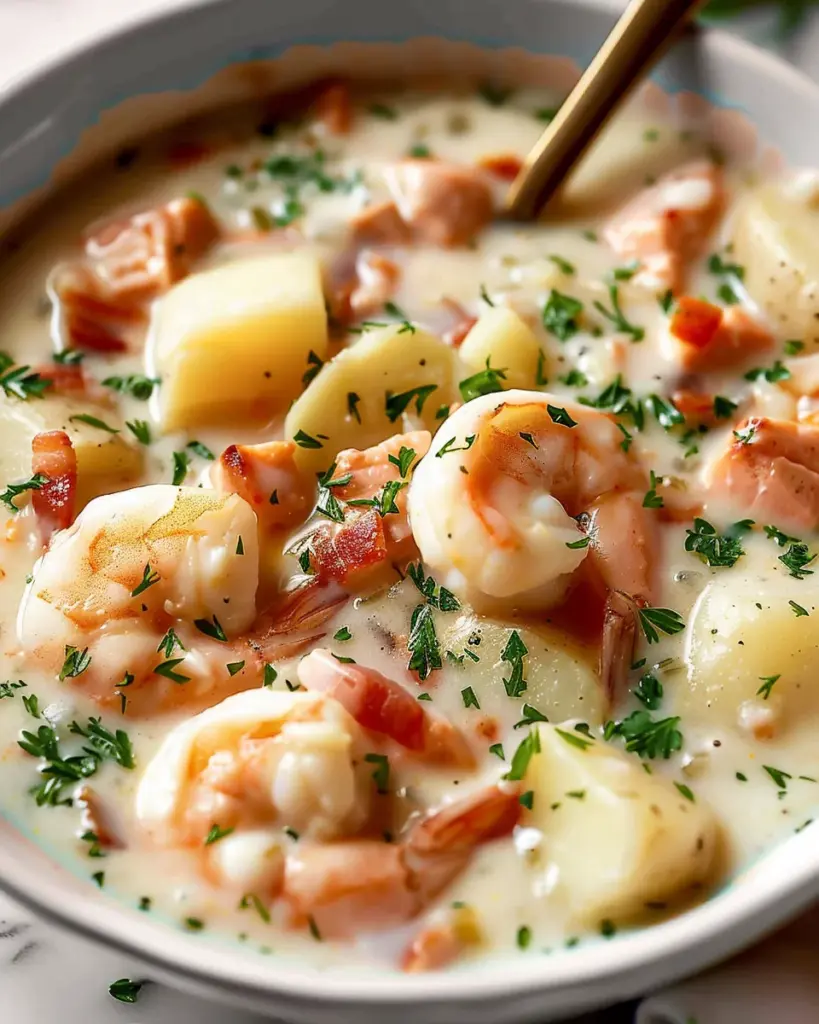
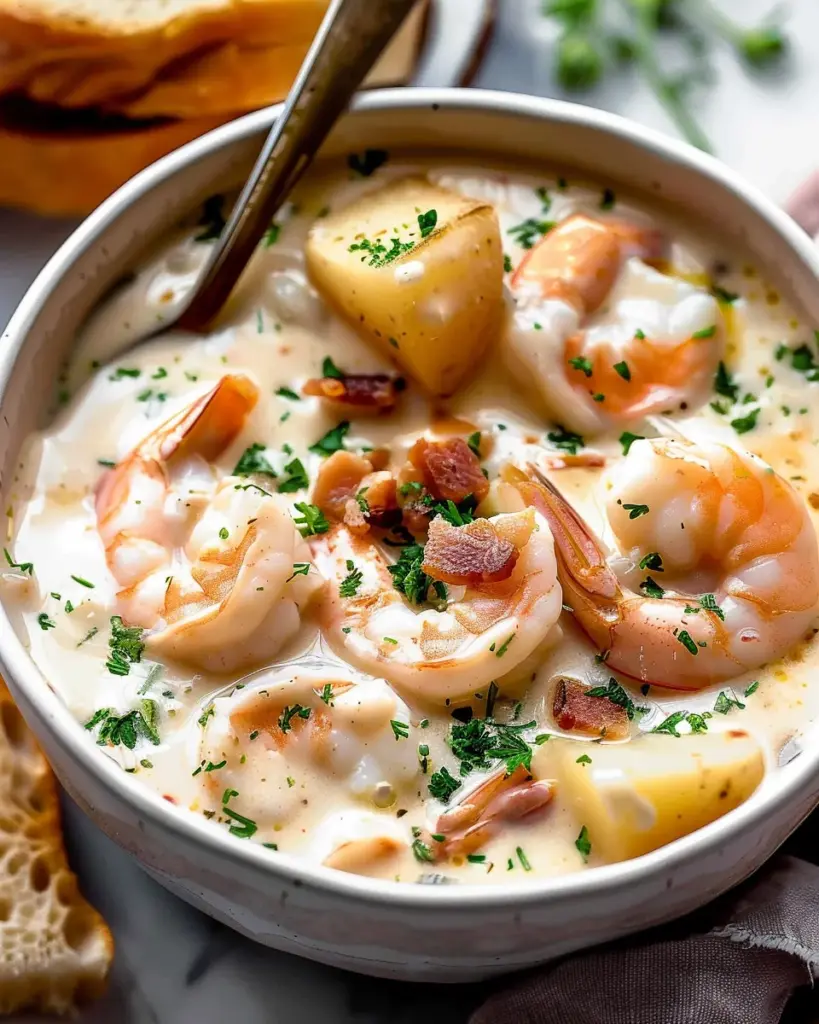
The Best Creamy Seafood Chowder is the ultimate comfort food—rich, creamy, and brimming with tender pieces of shrimp, salmon, white fish, and shellfish. Balanced with a touch of smokiness from crispy bacon or pancetta, this seafood chowder is more than just a soup—it’s a hearty, soul-warming meal in a bowl.
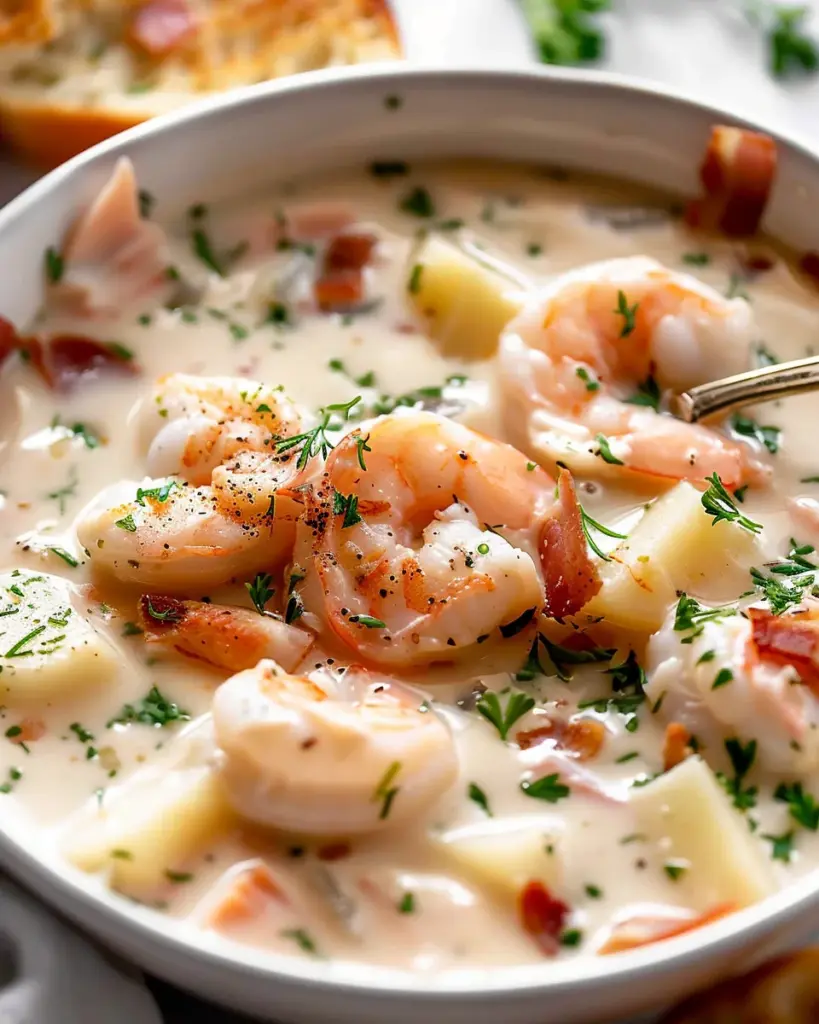
Whether you’re planning a cosy family dinner or looking to impress guests on a chilly evening, this chowder hits the mark. It’s luxurious in texture yet straightforward to prepare. Even better, it’s a one-pot recipe that blends the brininess of the sea with the richness of heavy cream, the earthiness of vegetables, and the savory depth of bacon.
Why You’ll Love This Creamy Seafood Chowder
- Rich and creamy texture from double cream
- Layers of flavor from seafood, herbs, and pancetta
- Easy to prepare in one pot
- Adaptable with fresh or frozen seafood
- Ideal for make-ahead meals and leftovers
This dish is perfect for cold evenings, dinner parties, or a satisfying weeknight meal. The versatility of ingredients, depth of flavor, and ease of execution make this The Best Creamy Seafood Chowder a go-to recipe for seafood lovers.
Preparation Phase & Tools to Use
Essential Tools and Equipment
To achieve the perfect The Best Creamy Seafood Chowder, having the right tools is crucial:
- Large heavy-bottomed pot or Dutch oven – Ensures even cooking and space for all ingredients
- Slotted spoon – Removes crispy pancetta without disturbing the rendered fat
- Whisk – Prevents lumps while combining broth and flour
- Wooden spoon or silicone spatula – Ideal for gentle stirring without breaking delicate seafood
- Measuring cups and spoons – For precision
- Sharp knife and sturdy cutting board – Ensures uniform cuts for even cooking
- Ladle – Serves the chowder neatly
- Colander or mesh strainer – Useful for draining thawed seafood
- Optional: digital kitchen scale and thermometer – For consistent results and perfect doneness
Importance of Each Tool
Each tool plays a unique role in delivering the ideal texture and flavor:
- The heavy pot retains heat well, which is essential for cooking potatoes and seafood evenly.
- A slotted spoon lets you reserve bacon while retaining its rendered fat for enhanced flavor.
- A whisk is key to integrating flour into the base, preventing a lumpy chowder.
- Wooden spoons allow gentle mixing without damaging the structure of the fish.
- Measuring tools are vital for balancing the richness and seasoning accurately.
Preparation Tips
To set yourself up for success:
- Thaw frozen seafood thoroughly, then pat dry to prevent excess moisture in the chowder.
- Pre-chop vegetables and measure ingredients before cooking for smoother workflow.
- Use room-temperature cream to avoid curdling when added to the hot soup.
- Dice vegetables uniformly to ensure even cooking, particularly the potatoes.
- Render bacon or pancetta until crispy to add a rich smoky note to the chowder.
These steps will save time and improve the final outcome of your The Best Creamy Seafood Chowder.
Ingredients List
For 6 servings:
- 150 g (5 oz) diced bacon or pancetta
- 1 large onion, finely chopped
- 2 celery stalks, finely chopped
- 1 medium carrot, finely chopped
- 2 cloves garlic, minced
- 1 kg (2 lb) mixed seafood (shrimp, salmon, white fish, shellfish)
- 2 large potatoes, diced
- 3 tablespoons all-purpose flour
- 1.5 liters (6 cups) seafood or chicken broth
- 200 ml (¾ cup) white wine (optional)
- 500 ml (2 cups) double cream (heavy cream)
- Salt and pepper to taste
- 2 tablespoons chopped fresh parsley
- 1 teaspoon thyme (optional)
Step-by-Step Directions
1. Prepare the Bacon and Vegetables
- In a large pot over medium heat, cook the diced bacon or pancetta until crispy.
- Remove with a slotted spoon and set aside. Leave the rendered fat in the pot.
- Add chopped onion, celery, carrot, and minced garlic.
- Sauté until the onions are translucent and vegetables soften (5–7 minutes).
Tip: Stir frequently to prevent browning. You want the vegetables soft but not caramelized.
2. Make the Roux
- Sprinkle the flour over the vegetables and stir continuously to coat.
- Cook for 1–2 minutes to eliminate the raw flour taste.
- This step forms the base that thickens the chowder.
Tip: Keep stirring to avoid sticking. The mixture should be smooth and slightly golden.
3. Add the Broth and Wine
- Gradually pour in the seafood or chicken broth, whisking constantly to prevent lumps.
- Add white wine if using, and stir to combine.
- Bring the mixture to a gentle boil.
Tip: A gentle boil activates the roux, thickening the base without overcooking the vegetables.
4. Cook the Potatoes
- Add diced potatoes and reduce the heat to a simmer.
- Cook for 10–15 minutes or until the potatoes are just tender when pierced with a fork.
Tip: Do not overcook at this stage. Potatoes should hold their shape.
5. Add the Seafood
- Gently add in the mixed seafood.
- Simmer for another 5–10 minutes, just until the seafood is opaque and fully cooked.
Tip: Seafood cooks quickly. Overcooking will cause it to become rubbery or fall apart.
6. Finish the Chowder
- Stir in double cream, parsley, thyme (if using), and season with salt and pepper to taste.
- Continue to heat gently until everything is hot and well combined. Do not boil.
Tip: Final seasoning is essential—taste the broth before serving.
7. Serve and Garnish
- Ladle the chowder into warm bowls.
- Top with crispy bacon or pancetta.
- Serve with crusty bread or a suggested side (see Part 2).
Variations & Customizations
- Fresh or frozen seafood can be used; just ensure it’s properly thawed and drained.
- Cream options: Use full cream for richness, or swap half with milk for a lighter version.
- Herbs: Replace thyme with dill or tarragon for different flavor profiles.
- Thickeners: For gluten-free, use cornstarch slurry instead of flour.
Serving Suggestions
The Best Creamy Seafood Chowder is a dish that shines on its own, but thoughtful serving ideas can elevate the experience. Whether you’re entertaining guests or indulging in a quiet night in, how you serve your chowder can make a difference.
Ideal Serving Methods:
- Serve hot in deep bowls to keep the chowder warm longer.
- Garnish with crispy pancetta or bacon, a sprinkle of fresh parsley, or a swirl of cream for presentation.
- Provide crusty bread on the side—perfect for dipping into the thick, creamy base.
- Offer lemon wedges for those who enjoy a bright finish to balance the richness.
- Pair with a glass of chilled white wine (like Sauvignon Blanc or Chardonnay) or a light lager.
Ambiance Tips:
- Serve with candles or warm lighting for a comforting, rustic atmosphere.
- Present the chowder in a sourdough bread bowl for a unique twist and added flavor.
Common Mistakes to Avoid & How to Perfect the Recipe
Avoiding these common errors will ensure your The Best Creamy Seafood Chowder turns out rich, flavorful, and perfectly textured every time.
1. Overcooking the Seafood
Seafood becomes tough and rubbery when overcooked. Add it near the end and simmer gently until just opaque and tender.
2. Skipping the Roux
The flour-based roux is essential for thickening. If skipped, the chowder may turn out watery or thin.
Tip: Stir flour well into the fat and vegetables, then gradually add the broth.
3. Adding Cream Too Early
Heavy cream should be added last. Adding it too early or at a boil may cause separation or curdling.
Tip: Always reduce the heat before stirring in cream and never let it boil afterward.
4. Not Seasoning Gradually
The chowder base, bacon, and broth all contribute salt. Season slowly and taste at every step.
5. Uneven Chopping
Inconsistent vegetable sizes lead to uneven cooking.
Tip: Dice potatoes and vegetables evenly for uniform texture.
6. Ignoring Resting Time
Like many soups, this chowder improves slightly after resting. A short wait helps flavors meld.
7. Using Cold Ingredients
Bringing cream and seafood to room temperature before adding prevents sudden temperature drops that can affect texture.
8. Using Inadequate Pot Size
A small pot may crowd the ingredients and cause uneven cooking or spillage.
Side Dish Recommendations
Pairing The Best Creamy Seafood Chowder with the right side dish adds variety and creates a complete, balanced meal.
1. Crusty Sourdough Bread
Hearty and chewy, sourdough is perfect for soaking up every drop of the creamy chowder base.
2. Garlic Butter Focaccia
Fragrant with herbs and rich with garlic, this bread elevates the meal’s comfort factor.
3. Simple Green Salad with Lemon Vinaigrette
A light, acidic salad provides balance to the rich chowder. Use mixed greens, cucumber, and a zesty vinaigrette.
4. Steamed Asparagus with Lemon Zest
Bright and fresh, asparagus contrasts nicely with the creamy base and adds color to the plate.
5. Roasted Brussels Sprouts with Pancetta
Roasting brings out a nutty flavor, and the pancetta echoes the chowder’s smoky bacon notes.
6. Cracked Black Pepper Grissini (Breadsticks)
These add a crunchy texture and are ideal for dipping.
7. Wilted Garlic Spinach
Quickly sautéed spinach adds greenery and subtle flavor without overpowering the chowder.
8. Apple and Celery Slaw
Crunchy, sweet, and tangy, this slaw complements the chowder’s creamy richness while adding textural variety.
Recipe Tips for the Best Results
To get the most out of your The Best Creamy Seafood Chowder, follow these tried-and-tested tips from expert cooks and recipe developers:
- Use a seafood mix that includes different textures and flavors, such as shrimp, salmon, white fish, and shellfish.
- Thaw frozen seafood completely before adding it to the chowder. Pat dry to prevent dilution of flavor.
- Cook potatoes until just tender before adding seafood to avoid overcooking.
- Gently stir seafood once added to prevent it from breaking apart.
- Use double cream (heavy cream) for the richest flavor and smoothest texture.
- Avoid boiling after cream is added. Simmer gently to prevent curdling.
- Add white wine during the broth step for added depth and acidity—optional but recommended.
- Taste and adjust the seasoning at the very end to account for the saltiness of bacon and broth.
Storage Instructions
Proper storage ensures your The Best Creamy Seafood Chowder remains delicious for days.
- Cool the chowder to room temperature before storing to avoid condensation.
- Store in an airtight container in the refrigerator for up to 3 days.
- Label the container with the date and contents for easy reference.
- Do not freeze if you want to preserve the texture. Freezing may cause the cream and potatoes to separate.
Reheating Instructions
Reheating this chowder requires a bit of care to maintain its creamy consistency and delicate seafood texture.
- Stovetop Reheating:
- Pour the chowder into a saucepan.
- Reheat over low to medium heat, stirring occasionally.
- Do not boil—bring to a gentle simmer and serve hot.
- Microwave Reheating:
- Transfer a portion into a microwave-safe bowl.
- Cover loosely with a microwave lid or plate.
- Heat on medium power in 30-second intervals, stirring between each, until hot.
Tip: If the chowder thickens too much during storage, stir in a splash of broth or cream during reheating to loosen the consistency.
Frequently Asked Questions
Can I use frozen seafood instead of fresh?
Yes, frozen seafood works well. Just be sure to thaw it thoroughly and pat it dry to prevent excess water from diluting the chowder.
What types of seafood are best for this recipe?
Use a mix such as shrimp, salmon, cod, haddock, mussels, and clams. The combination adds depth and variety in both taste and texture.
Can I make this recipe lighter?
Yes. Replace half the heavy cream with milk or use a lighter cream alternative. The chowder will still be creamy, but slightly less rich.
How do I avoid overcooking the seafood?
Add the seafood last and simmer for 5 to 10 minutes—just until the fish is opaque and shrimp is pink and curled.
What if my chowder is too thin?
You can thicken it by simmering it a little longer or mixing 1 tablespoon of cornstarch with 2 tablespoons of water and stirring it in, then cooking until thickened.
Is this chowder gluten-free?
Not as written. However, you can substitute the flour with a gluten-free thickener like cornstarch or use a gluten-free all-purpose flour blend to create the roux.
Can I freeze this seafood chowder?
It’s not recommended. Freezing can cause the cream to split and the texture of the potatoes to degrade. Freshly made or refrigerated chowder yields better results.
Can I make it ahead of time?
Yes. Prepare up to the point where the potatoes are cooked. Let cool, refrigerate, and finish by adding seafood and cream just before serving.
What goes well with seafood chowder?
Crusty bread, garlic focaccia, green salad with vinaigrette, or roasted vegetables such as Brussels sprouts pair excellently (see detailed suggestions in Part 2).
How long will leftovers last?
Stored properly in the refrigerator, leftovers will keep for up to 3 days. Reheat gently to maintain texture and flavor.