Creamy New England Fish Chowder
Few dishes offer the nostalgic warmth and maritime richness of creamy New England fish chowder. This essential seafood classic blends tender chunks of flaky white fish, creamy broth, and the earthy heartiness of potatoes into a soul-satisfying bowl of comfort. Steeped in coastal tradition, this chowder has graced dinner tables from Maine to Massachusetts for generations.
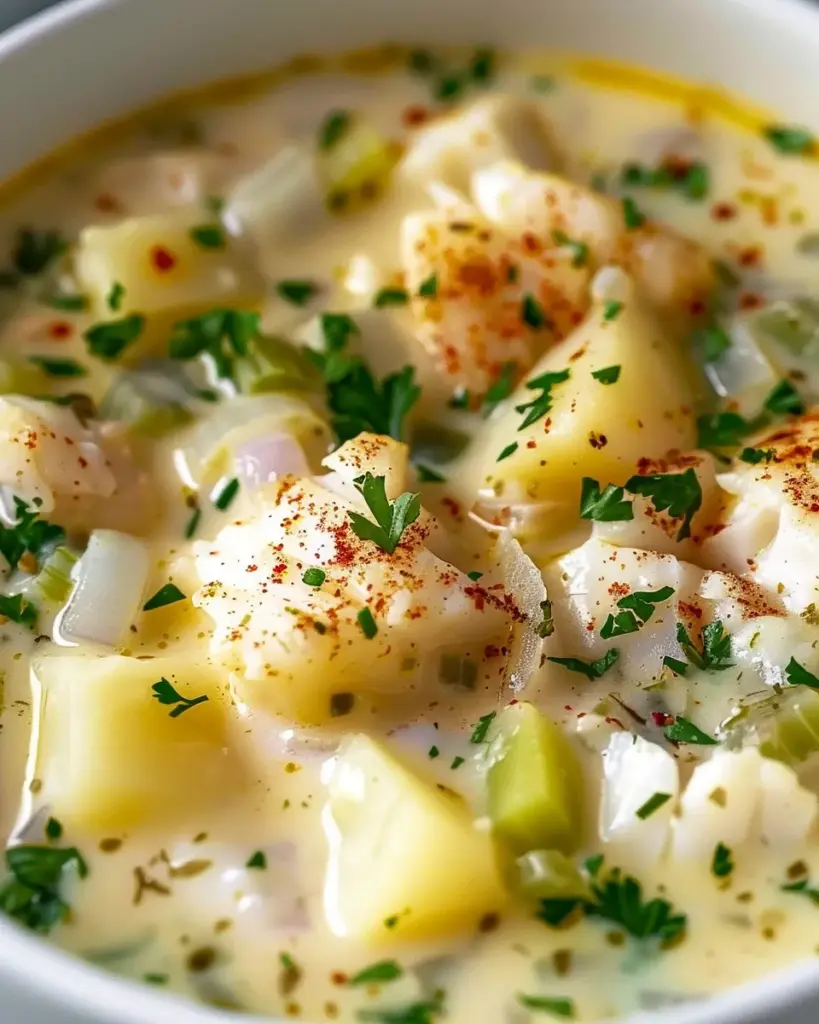
Creamy New England fish chowder is a staple for cool evenings, family gatherings, and anyone craving a warm, creamy, and satisfying seafood dish. Its appeal lies in its simplicity—using common pantry ingredients while delivering complex, layered flavors. Unlike heavy roux-based chowders, the authentic New England version lets the fresh taste of the sea shine through without overpowering flour-thickeners.
This recipe is flexible, approachable, and deeply flavorful. Whether you’re a seafood lover, a home cook trying something new, or someone looking to reconnect with classic American cuisine, this recipe will become a treasured favorite. It’s simple to prepare, easy to customize, and incredibly rewarding to share.
Preparation Phase & Tools to Use
Essential Tools and Equipment
Before you begin cooking, gather the essential tools to make the process smooth and efficient:
- Large heavy-bottomed pot or Dutch oven: Ensures even heat and prevents scorching the dairy base.
- Sharp chef’s knife: For cleanly slicing vegetables and fish.
- Cutting board: Use separate boards for vegetables and fish if possible.
- Fish spatula or slotted spoon: To gently stir or serve the fish without breaking the flakes.
- Wooden or silicone stirring spoon: Ideal for stirring without damaging the fish.
- Measuring cups and spoons: For accurate ingredient portions.
- Soup ladle: For easy serving without mess.
- Serving bowls: Pre-warm them for best presentation and heat retention.
Importance of Each Tool
Every tool plays a vital role in preserving the flavor and texture of this delicate chowder. A heavy-bottomed pot helps maintain consistent simmering without burning the milk or cream. A fish spatula allows for careful stirring and serving to keep the fish from disintegrating. Using proper measuring tools ensures the perfect balance of seasoning and creaminess.
Preparation Tips
To make the cooking process smooth:
- Prep all ingredients ahead of time (mise en place).
- Keep fish refrigerated until it’s time to add it—this maintains its texture.
- Bring cream or milk to room temperature to reduce the risk of curdling.
- Dice vegetables uniformly so they cook evenly.
- Avoid over-stirring once fish is added to maintain clean, chunky pieces.
- Use medium-starch potatoes like Yukon Golds to provide body without breaking down.
Ingredients
Main Ingredients
- 1 lb fresh white fish fillets (cod, haddock, or similar)
- 2 cups diced potatoes (Yukon Gold or white potatoes)
- 1 medium onion, chopped
- 2 celery stalks, diced
- 2 cups fish or seafood stock (or clam juice with water)
- 1 cup heavy cream
- 2 tablespoons unsalted butter
- 1 teaspoon dried thyme
- Salt and freshly ground black pepper, to taste
- Fresh parsley, chopped (for garnish)
Optional Ingredients and Variations
- Salt pork or bacon: Adds smoky flavor when rendered at the start.
- Bay leaf: Adds subtle herbal depth to the broth.
- Dry white wine: For deglazing the pan before adding stock.
- Carrots, diced: For added sweetness and color.
- Half-and-half or whole milk: Lighter dairy option in place of heavy cream.
- Sustainable whitefish alternatives: Such as pollock, hake, or monkfish.
Ingredient Tips
- Use fresh fish if possible, or high-quality frozen fish that’s thoroughly thawed.
- For richer flavor, use homemade fish stock or high-quality seafood broth.
- Avoid high-starch potatoes like russets; they break down too much during cooking.
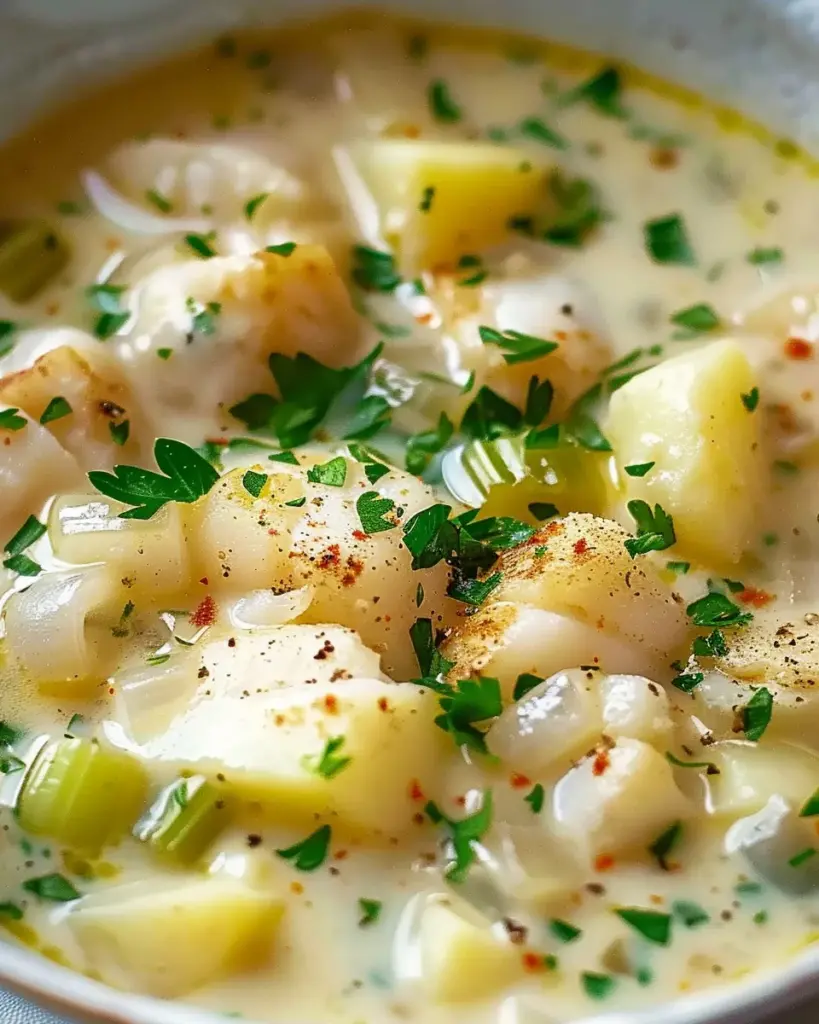
Step-by-Step Directions
Follow these steps for the perfect bowl of creamy New England fish chowder.
- Prep the ingredients
- Dice potatoes into ¾- to 1-inch chunks.
- Chop onion and celery evenly.
- Cut fish into 1- to 2-inch pieces, keeping them uniform.
- Sauté the vegetables
- In a large pot, melt butter over medium heat.
- Add chopped onion and celery.
- Cook for 5 minutes, stirring occasionally, until soft but not browned.
- Add potatoes and stock
- Stir in diced potatoes.
- Pour in fish stock or seafood broth.
- Bring to a boil, then reduce to a simmer.
- Cover and cook for 12–15 minutes, until potatoes are just tender.
- Incorporate the fish
- Gently add fish pieces to the pot.
- Simmer uncovered for 5–7 minutes, until fish is opaque and flakes easily.
- Do not stir vigorously—preserve fish chunks.
- Add cream and seasonings
- Lower the heat to prevent boiling.
- Stir in heavy cream and dried thyme.
- Add salt and pepper to taste.
- Warm through for 2–3 minutes—do not allow to boil.
- Garnish and serve
- Turn off heat. Let chowder rest 5–10 minutes for flavors to meld.
- Ladle into warm bowls.
- Garnish with chopped parsley.
- Serve with crusty bread or oyster crackers.
Variations
- Smoky version: Start with 3–4 diced bacon slices, render fat, and sauté vegetables in the drippings.
- Lighter option: Replace heavy cream with equal parts milk and half-and-half.
- Seafood chowder twist: Add a handful of chopped shrimp or clams in step 4.
- Extra herbs: Add bay leaf during simmering (remove before serving).
Serving Suggestions
A steaming bowl of creamy New England fish chowder is a complete experience in itself, but pairing it with the right accompaniments can elevate your meal from comforting to unforgettable.
Presentation Tips
- Serve in pre-warmed bowls to retain heat.
- Add a final swirl of cream or a small pat of butter before garnishing.
- Garnish with finely chopped parsley or chives for a fresh, vibrant finish.
- Accompany each serving with a thick slice of warm, crusty bread or a handful of oyster crackers.
Best Drink Pairings
- White wine: Choose a crisp Sauvignon Blanc or a lightly oaked Chardonnay.
- Beer: A clean, light ale or lager balances the creaminess of the chowder.
- Sparkling water with lemon or lime offers a refreshing palate cleanser.
Meal Occasions
This chowder works well as:
- A weeknight dinner with minimal prep.
- A cozy lunch on a cold day.
- A first course at a holiday gathering.
- A meal prep dish that tastes even better the next day.
Dietary Adaptations
- Gluten-free: Pair with GF bread or skip crackers.
- Lower fat: Use half-and-half instead of cream.
- Pescatarian-friendly: Omit bacon or pork if included in your version.
Common Mistakes to Avoid & How to Perfect the Recipe
Even simple dishes like New England fish chowder have nuances that can make or break the final result. Here are some key mistakes to avoid and how to ensure every bowl is perfect.
Overcooking the Fish
Mistake: Letting the fish simmer too long can make it rubbery or cause it to break apart.
Fix: Add the fish only after the potatoes are tender. Simmer gently for just 5–7 minutes, until the fish is opaque and flakes easily.
Boiling the Cream
Mistake: High heat after adding cream can cause it to separate or curdle.
Fix: Lower the heat before stirring in the cream. Never let the chowder boil after adding dairy.
Using Flour-Based Thickeners
Mistake: Traditional New England chowder doesn’t rely on flour or roux, which can dull the fresh seafood flavor.
Fix: Allow the natural starch from the potatoes to thicken the broth slightly. You can mash a few cooked potatoes directly in the pot if needed.
Choosing the Wrong Potatoes
Mistake: Russet potatoes break down too easily and create a mushy texture.
Fix: Use waxy or medium-starch varieties like Yukon Gold or white potatoes that hold their shape.
Skipping the Final Seasoning
Mistake: Under-seasoning makes the dish taste flat.
Fix: Always taste and adjust with salt and pepper at the end, once the cream and fish are added.
Using Poor-Quality Broth
Mistake: Weak or overly “fishy” broth will affect the final flavor.
Fix: Use a high-quality store-bought fish or seafood stock or make your own. Clam juice diluted with water is another good alternative.
Not Letting the Chowder Rest
Mistake: Rushing to serve can lead to bland flavor.
Fix: Let the finished chowder sit off the heat for 10–15 minutes. This resting period allows the flavors to meld and intensify.
Side Dish Recommendations
While the chowder is hearty and delicious on its own, the right side dish can balance the richness and complete your meal. Below are eight ideal side dishes to serve with creamy New England fish chowder.
Crusty Sourdough Bread
Thick slices of warm sourdough are perfect for dipping into the chowder and soaking up the creamy broth. The tang of the bread contrasts nicely with the sweet seafood flavors.
Oyster Crackers or Homemade Crackers
These classic additions offer a bit of crunch and saltiness. You can toast your own crackers with herbs and olive oil for a gourmet twist.
Garlic-Butter Green Beans
Quick-sautéed green beans with garlic and butter add a crisp, bright contrast to the creamy texture of the soup.
Simple Garden Salad with Lemon Vinaigrette
A fresh salad with lettuce, cucumber, and tomatoes dressed in a lemon vinaigrette brings acidity that balances the rich chowder.
Roasted Brussels Sprouts with Bacon
Roasting enhances the sweetness of Brussels sprouts, while crispy bacon echoes any smoky notes from your chowder if you’ve added pork.
Sweet Corn and Scallion Fritters
These light, golden fritters offer a slightly sweet, crisp bite that complements the smoothness of the chowder.
Lemon-Herb Rice Pilaf
This gentle, herby side with hints of citrus provides a starchy component that won’t overpower the chowder.
Steamed Asparagus with Hollandaise Drizzle
The mild bitterness of asparagus pairs well with the creamy richness of the chowder, and a small drizzle of lemony hollandaise adds elegance.
Recipe Tips, Storage, and Reheating Instructions
Perfecting creamy New England fish chowder involves attention to both cooking technique and post-preparation care. These expert tips ensure your chowder remains delicious from the first spoonful to the last leftover bowl.
Key Recipe Tips
- Use fresh fish for best flavor and texture. If using frozen, ensure it’s fully thawed and patted dry.
- Don’t over-stir once fish is added; allow it to gently cook in the broth.
- Choose the right potatoes like Yukon Golds for creaminess without falling apart.
- Add cream last and avoid boiling once dairy is added to prevent curdling.
- Let chowder rest for 10–15 minutes before serving. This helps flavors meld and the broth thicken slightly.
- Garnish just before serving for a fresh, vibrant finish.
- Taste before serving and adjust salt, pepper, or even add a splash of lemon juice for brightness.
Storage Instructions
- Cool the chowder to room temperature within 1–2 hours after cooking.
- Store in airtight containers in the refrigerator for up to 3 days.
- Do not freeze dairy-based chowders. Freezing can cause the cream to separate and the fish to become mushy.
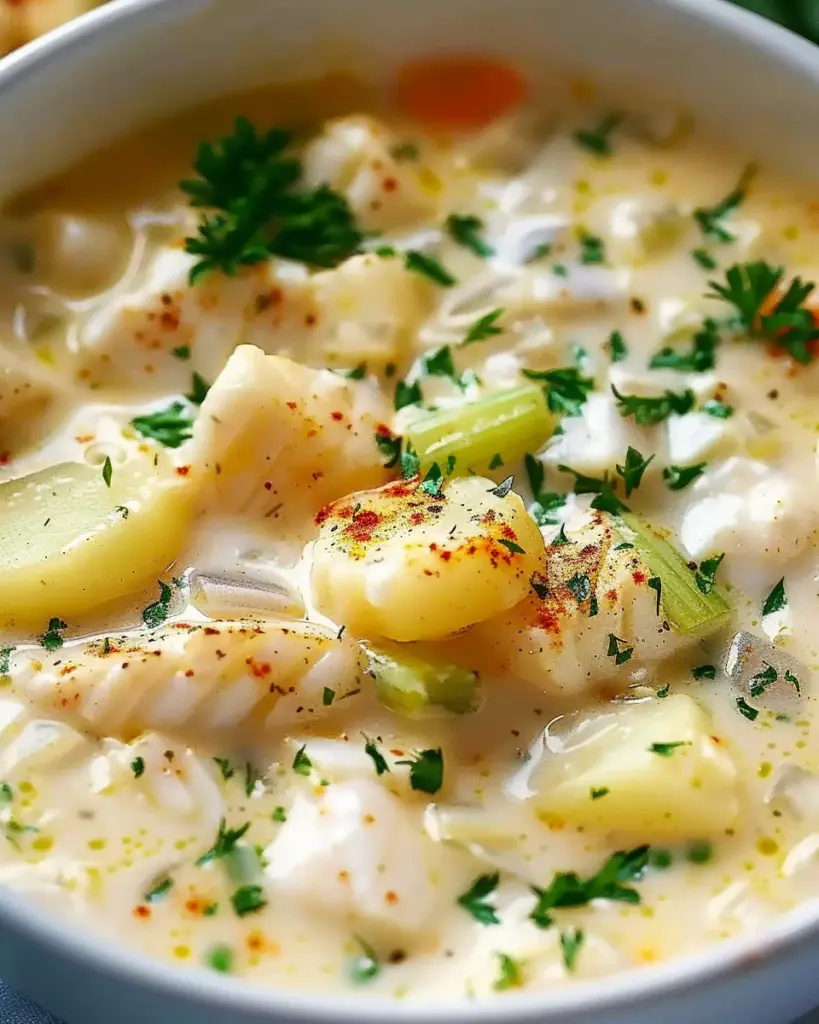
Reheating Instructions
- Stovetop preferred: Reheat chowder over low to medium heat. Stir gently and heat until just warmed through. Avoid boiling.
- Add a splash of cream or milk if the chowder has thickened too much.
- Microwave (if needed): Reheat in 30-second intervals at medium power, stirring in between. Do not overheat.
- Serve immediately after reheating and garnish again for freshness.
FAQs
What kind of fish is best for New England fish chowder?
Mild, firm whitefish such as cod, haddock, pollock, or monkfish are ideal. These fish hold up well in the simmering broth and absorb the chowder’s flavors without becoming mushy.
Can I make it without cream?
Yes, you can use whole milk or half-and-half for a lighter version. However, using just milk may produce a thinner chowder and increases the risk of curdling if overheated.
Do I need to use homemade fish stock?
While homemade fish stock adds deep flavor, you can use high-quality store-bought fish or seafood broth. Clam juice diluted with water is also a common and convenient substitute.
Can I thicken it with flour?
Traditional New England fish chowder avoids flour or roux to keep the texture delicate and the flavor clean. If you prefer a slightly thicker broth, mash a few potato chunks into the chowder rather than using flour.
What are the best potatoes to use?
Use Yukon Gold or white potatoes for a creamy texture that holds its shape. Avoid russets, which tend to break down and make the broth overly thick.
How long will leftovers last?
Properly stored in an airtight container, leftovers can last up to 3 days in the refrigerator. Reheat gently to preserve flavor and texture.
Can I freeze fish chowder?
It’s not recommended. Freezing often changes the texture of both the fish and cream, resulting in separation and a grainy consistency upon reheating.
Why is my chowder too thin or too thick?
Too thin: Let it simmer uncovered slightly longer or mash some potatoes.
Too thick: Add a splash of warm broth, milk, or cream to thin it to your desired consistency.
Can I make this chowder ahead of time?
Yes. In fact, chowder often tastes better the next day as the flavors meld. Store it in the fridge and gently reheat before serving.
What garnishes work best?
Chopped fresh parsley, chives, a drizzle of cream, or even cracked black pepper enhance the presentation and flavor. For added richness, a sprinkle of crispy bacon bits works well if pork is part of your variation.